Wednesday, November 25, 2015

Winter of Zombie 2015: Scott Lefebvre

You're reading Books, Beer and BLOGshit! Its the only blog on the internet that loves to over-pronounce the word croissant. I am your over-the-top French accented host, Monsieur Fraaaaank!

I'm busting into the word driven version of my world famous, flamboyant French accent and that can only mean one thing! Author Scott Lefebvre is up on The BLOGshit today. Le-fev-REH or Le-Fehvvvvvvv. Or Scott Le Fleh, all acceptable pronunciations if you do it with the proper French flair.

Viva La France and Viva Lefebvre!


The Blogshit: Let’s cut to the chase, what are you promoting for the Winter of Zombie?

Scott Lefebvre:  As with all promotional opportunities, I’m hoping to draw the attention to new readers to check out my work as an author/publisher, hoping that by checking out one of my books they’ll like it enough to check out the rest of my books.  For the Winter Of Zombie event, I’m trying to raise public awareness of two novellas that are part of a larger epic-length post-apocalyptic zombie-epidemic project I’ve been working on, called The End Of The World Is Nigh.

The Blogshit: It’s rarely ever talked about, but how do you envision the outcome of the zombie world you have created? Is there hope? Will humanity succumb to the new world order? What is the outcome of all this horrible zombie business?

Scott Lefebvre:  I know what the end of the story is in the world that I’m working on, but I think that the journey will be more interesting than the destination.  Plus I don’t want to give away the ending, because, like every other author I think I’ve come up with a unique and interesting solution to the problem.  Different authors use different kinds of zombies.  The kind of zombies that I’m using are of medium speed and an animalistic/instinctual intelligence, but they’re not immortal.  I’m giving them about a year until exposure and starvation kills most of the “zombies” off.  But in the world I’m working in 95% of the population of North America becomes dead/undead so I’m more interested in the living characters having to deal with a mostly abandoned and dangerous world in the absence of any kind of central power keeping society running smoothly.  There will be cities on fire, fortified encampments of survivors, and roving bands of cannibals.  My goal is to take the few things I liked from the zombie-epidemic and post-apocalyptic books and films that I’ve enjoyed and use what I thought worked while avoiding what didn’t work for me as a reader/viewer.

The Blogshit: As a writer of zombie fiction, do you feel you can sustain your career writing about zombies only or do you feel you will need to write outside the sub-genre to continue? What avenues will you branch out to if you do feel a need to expand?

Scott Lefebvre:  As a fan of the George A. Romero zombie movies, I loved the way that his films explore the way that different small groups of people experienced the same phenomenon.  After watching his films over and over I started to imagine what that scenario would be like where I lived and in some of the places across the country I have had the good fortune to visit.  I was also a huge fan of Stephen King’s The Stand.  After the fourth or fifth time through that book I came to appreciate the structure of the book and the post-apocalyptic theme, but the metaphysical duality of good versus evil felt too simplistic.  As an atheist, I don’t believe that there is a higher power that can be appealed to and I’m more interested in the way that relatively ordinary people would deal with an extraordinary situation.  I loved the comic book series The Walking Dead, but it didn’t fulfill my desire to experience the ultimate in post-apocalyptic zombie-epidemic fiction.  My goal is to gradually write novella length installments until I have enough material to put together an epic-length work where I can shuffle together all of the novellas into an all-encompassing work.  But, to answer your question more directly, I’ve written in a variety of genres and mediums.  I’ve done fiction, non-fiction, reviews, and screenwriting, so I don’t feel limited to writing about zombies.  I just want to write the post-apocalyptic zombie-epidemic book I always wanted to read.  After I finish this book, I think I’ll be able to walk away from the zombie genre feeling like I’ve done as much as I could to try to push the concept to its logical conclusion.  If you follow the arc of the George A. Romero zombie movies, he was trying to do the same thing but guiding the idea in a different direction.  Even though it’s a sub-plot of Day Of The Dead, Romero was exploring the idea of trying to domesticate the zombies, an idea he explored further in Land Of The Dead, where the zombies seemed to be nearing a self-awareness as a different type of human.  As much as I enjoy those films, I’m not as interested in the concept of trying to domesticate zombies.  I like my zombies persistent, feral, and hungry.


The Blogshit: What is more important to the story: A sympathetic human survivor or a zombie with an interesting storyline?

Scott Lefebvre:  I know that other authors explore the possibility of using the awareness of the zombies as themes.  Philip Nutman’s Wetwork is a great example of how that can be done well.  In my book series, I’m more interested in the “man vs. man” conflict of survivors living in a post-apocalyptic world than with the “man vs. nature” conflict existing as a constant threat driving the characters to work towards a common goal.  The role of “nature” in the background of the books would be the zombies and the collapsing infrastructure of the world the characters live in, but even more dangerous than the persistence of the hungry hordes of the undead is the danger of other people trying to survive in a desperate situation.

The Blogshit: For you, who are the most important writers in zombie fiction at this moment?

Scott Lefebvre:  Obviously Robert Kirkman, Tony Moore, and Charlie Adlard are hugely important as influences in zombie fiction considering that The Walking Dead is one of the most popular shows on the air.  But the films of George A. Romero and the writing of Richard Matheson and Cormac McCarthy’s The Road are much stronger stylistic influences on the style of work that I’m trying to create.

The Blogshit: Is there room for sex in the zombie apocalypse?

Scott Lefebvre:  Yes.  But the politics of sex and sexuality would by necessity be much different in the collapse of society that would occur in the wake of a full-blown zombie epidemic.  In civilized independent encampments of survivors, pregnancy would be an additionally stressful consideration without the modern amenities of hospitals with trained doctors on call.  Outside of the pockets of what remained of civilization the chances of being killed, raped, and eaten, not necessarily in that order, would likely be much higher than they already are in the absence of civil order.  In a world where resources are scarce and the threat of death is constant there may not be as much room for chivalry and courtesy as there is in our modern world.  That being said, I’m not planning on graphically exploring the consequences of roving bands of cannibals that want nothing better than to have rape for dinner.  I might mention it in passing, but I don’t want to describe it in detail.  My intention isn’t to write gore porn for rape fans.  There’s enough blood, gore, and violence in the books to earn the horror genre tag without having to use the “woman in peril” button too.

The Blogshit:  How much consideration do you give to the seasons in your zombie stories?

Scott Lefebvre:  In the project I’m working on, the seasons play a central role in the story arc.  I’m planning on working with between one and two years for the arc.  In the first year, the threat of the undead is constant and overwhelming, but the amount of resources available to the survivors, left behind by the dead/undead is considerable.  In the second half, the threat of the dead/undead remains, but the problem of survival in a world where the mechanisms of production that supply our desires for consumption becomes a much larger and more interesting problem than just having to escape from hordes of hungry zombies.  I’m interested in exploring life in a world where humanity has the chance to start over again, but with the constant threat of a disease that is incurable and could rise up again to end the human experiment.

Think Pink


The Blogshit: Our final question always revolves around zombie themed food. This Winter of Zombie, Books, Beer and BLOGshit wants you to consider setting up a food truck to cater to a zombie clientele. What would you name your Zombie Food Truck?


Scott Lefebvre:  In the interest of equality, and considering that to zombies, humans would be considered equal opportunity targets, I think I’d name my Zombie Food Truck: We’re All Pink On The Inside.

Paranoid or Steroid? You Decoid.


Lefebvre on Lefebvre:

Scott Lefebvre can write about whatever you want him to write about.
Mostly because when he was grounded for his outlandish behavior as a hyperactive school child, the only place he was allowed to go was the public library.
His literary tastes were forged by the works of Helen Hoke, Alvin Schwartz and Stephen Gammell, Ray Bradbury, Richard Matheson, Stephen King, Clive Barker, Edgar Allan Poe, and H. P. Lovecraft.
He is the author of Spooky Creepy Long Island, and Condemned; and a contributing author to Forrest J. Ackerman’s Anthology of the Living Dead, Fracas: A Collection of Short Friction, The Call of Lovecraft, and Cashiers du Cinemart.
His reviews have been published by a variety of in print and online media including Scars Magazine, Icons of Fright, Fatally Yours and Screams of Terror, and he has appeared in Fangoria, Rue Morgue and HorrorHound Magazine.
Check out his publishing imprint Burnt Offerings Books here:
Check out his electronic music here: soundcloud.com/master_control
Check out his Etsy here: www.etsy.com/shop/ScottLefebvreArt
Stalk his Facebook at: www.facebook.com/TheLefebvre
E-mail him at: Scott_Lefebvre@hotmail.com

Tuesday, November 24, 2015

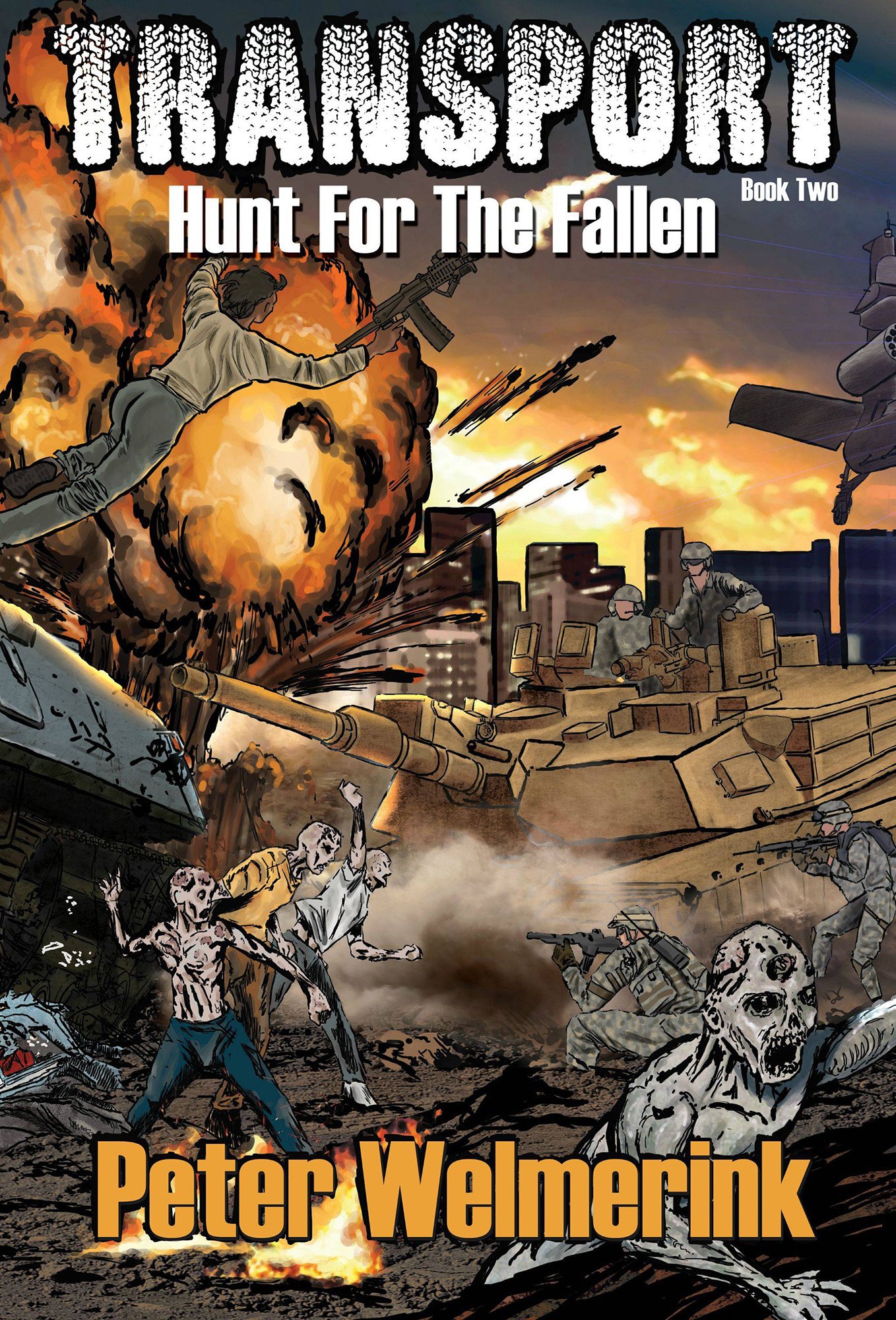
Winter of Zombie 2015: Peter Welmerink

You're reading Books, Beer and BLOGshit! Its the only blog that is a little wet behind the collar. I am your five gilled blog host, Mr. Frank. 

Peter Welmerink on the BLOGshit today. He once turned down a role to play Officer Poncherello on the hit television series, C.H.i.P.s Instead Mr. Welmerink went on to become a relative unknown in the world of modern English fiction. We seek today to change all that and help elevate Peter to the upper echelons of the literary community or at the very least, sell a book for him.

So get on your tight fitting khaki motocycle pants and strap on your standard issue California Highway Patrol helmet and get ready to dive into the world of zombie author, Peter Welmerink.


The Blogshit: Let’s cut to the chase, what are you promoting for the Winter of Zombie?

Peter Welmerink:  I am promoting my TRANSPORT Post Post-Zombpocalyptic military action-adventure series during the WINTER OF ZOMBIE 2015. Zombies have always been my favorite “monster.” I have an extensive interest and knowledge of Military History, and basically just like to blow things up (fictionally) with big tanks and big guns.
As I got tired of all the apocalyptic settings being mainly in the larger cities, I thought FUCK THAT. LET’S BRING SOME ZOMBIE AND APOC CHAOS HOME TO MICHIGAN.

The Blogshit: It’s rarely ever talked about, but how do you envision the outcome of the zombie world you have created? Is there hope? Will humanity succumb to the new world order? What is the outcome of all this horrible zombie business?

Peter Welmerink:  We’re still here. They’re still here.
Like Humankind usually does, we survive even in a post-post undead-filled world.
But as usual human nature goes, we are going to continue to duke it out, debating and fighting over if the remaining zombie populace should be fully eradicated, or, if we can keep feeding the local ones the doped meat byproducts we’ve been feeding them, we can just leave our poor rotting friends and relatives alone until they…dissolve, turn into a steaming pile of sidewalk stew, whatever.


The Blogshit: As a writer of zombie fiction, do you feel you can sustain your career writing about zombies only or do you feel you will need to write outside the sub-genre to continue? What avenues will you branch out to if you do feel a need to expand?

Peter Welmerink:  I have several ideas and stories in which I could sustain writing about my little zombie world and characters I’ve created. However, as I enjoy writing Epic Fantasy and Steampunk, and whatever else strikes my fancy, I will most certainly delve into other worlds and genres beyond the shambling realms of Zombidom.

The Blogshit: What is more important to the story: A sympathetic human survivor or a zombie with an interesting storyline?

Peter Welmerink:  I’d say you have a 50/50 split there, though an interesting zombie in an interesting storyline would pique my interest. I have a 1950’s gas station attendant in my TRANSPORT storyline. He not only provides INTEL to my characters (not giving away any spoilers on how he does it) but also assists my transport commander in fighting off a semi-undead assassin in one of the books.

The Blogshit: For you, who are the most important writers in zombie fiction at this moment?

Peter Welmerink:  Armand Rosamalia. Of course. LOL
I am going to throw some perhaps names out there that people might not know but write some bomb shit when it comes to zombidom: Jay Wilburn, Jack Wallen, Rob E Boley and Brent Abell.
And Armand Rosamalia. Of course.

The Blogshit: Is there room for sex in the zombie apocalypse?

Peter Welmerink:  Yes, just don’t get caught with your pants down and rear car windows rolled down when you playing hide the pickle with your lover. Depending on your position, something already dead might crawl up your ass, or perhaps, claw up your ass.
Seriously, there is room for anything, anything is fair game, including sex I suppose, in the zombie apocalypse.
One of my more crude and lewd crew members in my TRANSPORT books alludes to having had , erm, relations with some undead female prostitutes. I do not go into detail on the how’s and why’s.


The Blogshit:  How much consideration do you give to the seasons in your zombie stories?

Peter Welmerink:  The first TRANSPORT book takes place in Autumn 2025, and there is a short epilogue piece where my characters are in Milwaukee that winter. TRANSPORT: HUNT FOR THE FALLEN takes place in Spring 2026 during some intense rain storms and flooding. TRANSPORT: UNCIVIL WAR takes place a few months later in the heat of summer.

The Blogshit: Our final question always revolves around zombie themed food. This Winter of Zombie, Books, Beer and BLOGshit wants you to consider setting up a food truck to cater to a zombie clientele. What would you name your Zombie Food Truck?


Peter Welmerink:  Funny you mention this. The name of the “zombie food truck” in my TRANSPORT series is called THE HURON, and it is 72-tons of wheeled and tracked armored personnel carrier, which (one of its jobs) stops and doles out doped meat to the local undead populace to keep them calm, docile, because the living city folk on the other side of the enclosure feel sorry for their effed-up, afflicted family and friends.


Peter Welmerink Home Page:  http://peterwelmerink.com

Monday, November 23, 2015

Winter of Zombie 2015: JL Koszarek

You're reading Books, Beer and BLOGshit! It's the only blog on the internet that is thorough about nothing. I am your Laissez-faire host, Mr. Frank!

We have a writer for the Winter of Zombie 2015 that is quite thorough. One JL Koszarek. If you want explicit details and full bodied answers you've come to the write blog today. JL answers interview questions like Italian wine sates the palletes of the most discerning wine connoisseur.  Did someone say wine? I'm thirst.  Read the interview, I'll be drunk by the time your done.


The Blogshit: Let’s cut to the chase, what are you promoting for the Winter of Zombie?

JJ Koszarek:  I’m actively promoting DIVIDE THEN CONQUER, the first book in the ZOMBIE COMPANY CRUSADE series. I am very excited to continue working with Thad David, my collaborator on the series and introduce readers of the Zombie genre to our literary collaborative effort. DIVIDE is the companion reader to Thad David’s ios mobile game app called ZOMBIE COMPANY CRUSADE, which to my way of thinking, separates it from other books in our genre.
DIVIDE opens with Jack Mason, our lone protagonist as he struggles to find his way across country from San Diego to Colorado Springs during the first days of the scourge, the viral outbreak that unleashes the Zombie apocalypse. Jack’s discoveries and the characters he meets along the way introduce the reader to the wide spread nature of the scourge and widens the narrative. DIVIDE introduces the safe zones that bring the reader into the dysfunctional halls of The White House, the secretive cold war era caverns under the mountains in Colorado Springs, civil unrest and search and rescue missions in San Diego, and a southern militia stronghold in Savannah, Georgia. Each setting has its heroes, villains, and colorful characters driven to survive in this new world disorder.
DIVIDE, for the most, part takes place in the United States, and explores human behaviors from heroism to duplicity, and illustrates our overall will to survive within the constraints of various contemporary moral, ethical, and political factions. The most challenging part about writing DIVIDE is the size of our cast of characters, settings, plots, and subplots, but it’s my feeling that Thad and I have done well to maintain continuity that lends itself to plot twists, surprises, and excitement without derailing the theme of the book. It’s my hope that our readers can find parts of themselves reflected in the characters who, in my opinion have come to represent the heart, mind, and spirit of the USA. I’m proud of this thought-provoking work, and believe our readers will enjoy it.
DIVIDE THEN CONQUER, BOOK ONE of the ZOMBIE COMPANY CRUSADE SERIES is available via Amazon, Barnes and Noble, and ibooks in electronic format.

The Blogshit: It’s rarely ever talked about, but how do you envision the outcome of the zombie world you have created? Is there hope? Will humanity succumb to the new world order? What is the outcome of all this horrible zombie business?

JJ Koszarek:  Where there is humanity, there is always hope. Thad has more of an idea of where all this is headed where our project is concerned, considering ZCC is his brain child, so I’m speaking strictly for myself here when I say that adversity promotes harmony and ultimately brings people together, if not only temporarily. I experienced this first hand in the aftermath of hurricane Katrina. For a short time, the people in my community came together like never before. Race, economics, politics, and even shared histories and long held grudges (as exist in any small town) were forgotten. It didn’t matter who you were, you were a survivor. Today, ten years later, our community is forever changed by the catastrophe and that short moment of pure equanimity, but those old social patterns are becoming evident again. The survivors are now regular people still struggling with the trauma of the catastrophe, but they’re back to dealing with the everyday trauma of getting along in life. We’re back to being singular members of a community, but a community none-the-less.
In terms of reality, every community lacks equanimity. This is one of the waypoints in the plot of DIVIDE. The work’s lofty goal of attempting to divide a nation to ultimately bring it back together hinges on this moment of catastrophe, survival, brotherhood, sisterhood, coming together to rebuild something. It explores how people who are thrown into an inconceivable situation make decisions. Altruism, power, greed, love, family, religion and spirituality, and the natural need for a new way are the parameters within which the human ability, or inability to make rational decisions occurs.
As a character based writer, the only answer I can give you regarding the outcome of all this horrible zombie business is that it’s up to my characters where this all goes. They have to decide whether to follow their hearts or their minds for the good of all or for the good of a few. The ball is in their court. I hope you’ll read it and discuss it with your friends and family because it can go to hell in a handbasket, or it can be a catalyst for real, lasting, meaningful change.
As an optimist, I vote for real, lasting, meaningful change.

The Blogshit: As a writer of zombie fiction, do you feel you can sustain your career writing about zombies only or do you feel you will need to write outside the sub-genre to continue? What avenues will you branch out to if you do feel a need to expand?

JJ Koszarek:  DIVIDE THEN CONQUER, Book 1 of the ZOMBIE COMPANY CRUSADE SERIES is my third book.  My first manuscript was unfortunately destroyed by hurricane Katrina. Due to extenuating circumstances not limited to the ones already discussed, I was unable to locate or rewrite the story. Maybe someday I’ll rewrite it. Bits and pieces of it are still in my head. Maybe everything I write is somehow akin to it, I don’t know. It was a great story, if I may say so myself; historical romance with a smattering of supernatural/magic/fantasy tossed in. My other book, Twisted Oak: A Sexual Odyssey was published in May of 2014. It’s full-tilt erotica/contemporary romance. It was fun as heck to write and the prequel is bouncing around my head.
There are so many things bouncing around in my head.
Variety is the spice of life. As a freelance writer, I pride myself on being able to adapt to any genre; fiction or nonfiction; academic, informative, fun; whatever. Sadly, I am the worst poet in the world, though. I read everything I can get a hold of, so I feel as if I am well versed in a wide variety of genres, but my preference is historical fiction because I believe history is where every good story starts. History is what produces the what, how, why, who we are. Stories don’t just fall out of the sky. They are created histrionically on both the micro and macro levels. History creates my characters, and as a character driven author, my characters draw from their history to create their stories that somehow end up on the computer screen.
Zombie fiction offers a unique opportunity for me to incorporate the many genres I enjoy into the story. Sure, DIVIDE is zombie fiction, but you’ll also find history, romance, sociology, psychology, science, political intrigue, military and wartime history, along with contemporary issues we find in our newsfeeds every day. DIVIDE is a spicy gumbo, a real intellectual thrill ride. I am enjoying the process more than I thought I would at the onset.
I plan to continue work on the ZCC series because I believe in it. It’s a great story. It’s a joy to write, and I believe our readers will find it a joy to read. As such, zombie fiction will continue to be an important element of my career. So will erotica. So will historical fiction. So will blogging. I’m a writer. Period. Will zombie fiction sustain my career? That remains to be seen. I’m not even certain this whole writing thing is sustainable at all at this point. I want it to be, so I keep writing. It’s up to my readers to decide whether or not it’s sustainable. I keep keeping on. It’s what I have to do…
If writing is a career, it’s a strange one. It’s more like a compulsion than a career, I think. Whether or not I make a penny (I really hope I do because eating is a good thing), I’ll keep at it because Jack Mason and the rest of my ZCC characters keep me awake at night. If I don’t write their stories, they will drive me insane. I invite you all to join my insanity and see where it leads.


The Blogshit: What is more important to the story: A sympathetic human survivor or a zombie with an interesting storyline?

JJ Koszarek:  They say to write what you know, so humans are always central to my stories. My degree is in Behavioral Science because I like to think about what makes people do the things they do. Without drowning in minutia here, the process of how humans make decisions and their associated behaviors fascinates me. Inner conflict, cognitive dissonance, we all experience it. It’s part of the human condition and makes for excellent fiction.
Zombies are also important to the story because they are the impetus that propels my characters toward their destiny. Like humans, zombies also have a history, but as of yet, theirs is unknown to this writer. Rest assured, zombies will settle into their important role as our story unfolds. Their destiny, however is a dark one because they are imprisoned in a diseased body, therefore have no influence over it. The only hope for zombies lies in the hands of the humans. Isn’t this where all of our destinies lay?
The Blogshit: For you, who are the most important writers in zombie fiction at this moment?

JL Koszarek:  Zombies having fell out of interest for me since the 1980’s, I was and still am not as well-versed as I’d like to be in the contemporary zombie fiction world. I am heavily influenced by Max Brooks. Alex Garland also comes to the forefront. Both authors are revolutionary in that they reinvented their zombies to reflect today’s world, today’s technology, dysfunction and swiftness. I am terrified by their zombies!
Writing has been such a singular activity for me; just me and my computer, but now having collaborated with Thad, I have found value in the voices of other authors in this genre and beyond. I am encouraged by and can’t wait to get to know the other authors involved in the Winter of Zombie Blog Tour. For me, the new, and not-so-new zombie authors are an aspiring group. Learning from them through this experience will prove to be invaluable for this author moving forward.  

The Blogshit: Is there room for sex in the zombie apocalypse?

JL Koszarek:  Of course! How will the human race survive without sex? Humans are sexual beings. Faced with the idea of extinction, I can only imagine the evolutionary instinct to procreate will become even more acute. Parents will protect their children with a vigilance that we may not have experienced before. Our human tribal nature will take hold again, which brings me to the previous question about hope. Herein through the creation of new human lives, the sexual act, is where humans will find hope for security, love, acceptance, and survival. Sex is very nearly always at the center of it, but as DIVIDE is a young adult novel, this element will be introduced with taste and will be age appropriate.
Most of the characters in DIVIDE haven’t had time to explore sexual relations yet. They’re still concentrating on surviving the day, however there is chemistry. Sparks fly between characters, and some are…well, some are just into sex for all the wrong reasons.

I'm JRUNK! (hic)


The Blogshit:  How much consideration do you give to the seasons in your zombie stories?

JL Koszarek:  Seasons have not played a large role in DIVIDE yet, but they will in Book Two. Surviving the zombie apocalypse in warm weather is difficult, but winter is coming and with it will come challenges specific to freezing temperatures and precipitation. The cold and snow will affect the zombies, too. In the apocalyptic world, the weather has a direct influence on our chances of survival.
The change of seasons is also a great literary tool to convey the passage of time. The ZCC series will span months, and possibly even years. It is my feeling that the change of seasons will come into play in this way going forward.
Thad and I are gearing up for our first Winter of Zombies in the ZCC series. As I sit here today, I wonder which character(s) aren’t ready. I wonder who will be alive in the springtime. 

The Blogshit: Our final question always revolves around zombie themed food. This Winter of Zombie, Books, Beer and BLOGshit wants you to consider setting up a food truck to cater to a zombie clientele. What would you name your Zombie Food Truck?

Roadkill!
Zombie Gastronomy Go-Go.
We got guts, glory, and gravy.